25 Best Blonde Hair styles for 2026
I asked three different colourists what “blonde” means this year and got three different answers, which tells you most of what you need to know about 2026. Blonde hair styles stopped being one trend a while back. Now it is basically a whole category soft, low fuss shades living right next to bold, high contrast ones, with almost nothing in between counting as “boring.” The common thread, if there is one, is that almost none of it is supposed to look like it came from a bottle. Even the boldest platinum jobs are being toned and cut to look like they just happened.
I will be honest when I started pulling this list together, I expected a handful of overlapping trends dressed up with different names. That is not really what happened. Colorists are genuinely splitting blonde into distinct lanes this year: warm versus cool, structured cuts versus shaggy texture, bold statement pieces versus quiet, grownout color nobody would guess was recent. Twenty styles later, here’s what is actually worth booking, who each one suits, and what to say out loud in the chair so you get what you meant instead of what got lost in translation.

Quick Answer:
What is Trending in Blonde Hair for 2026?
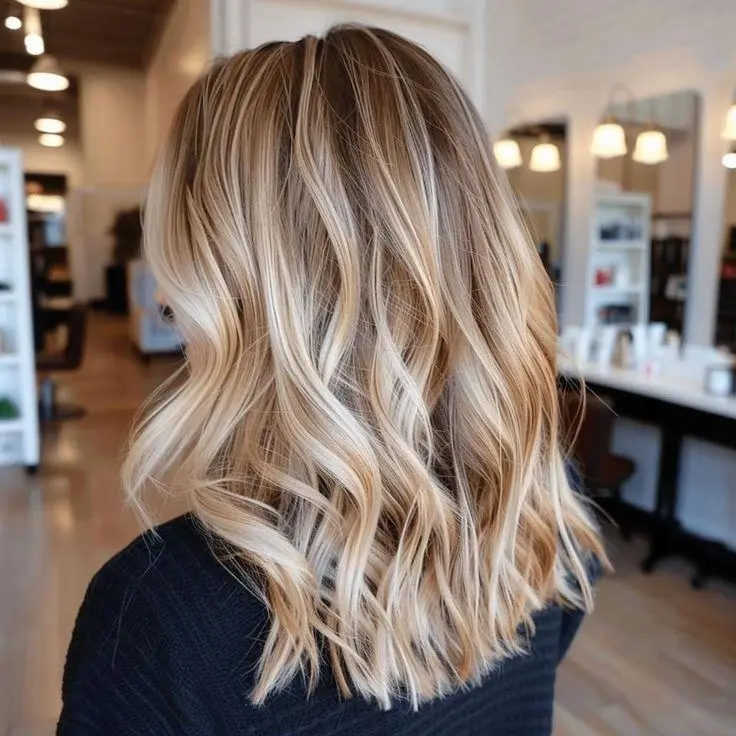
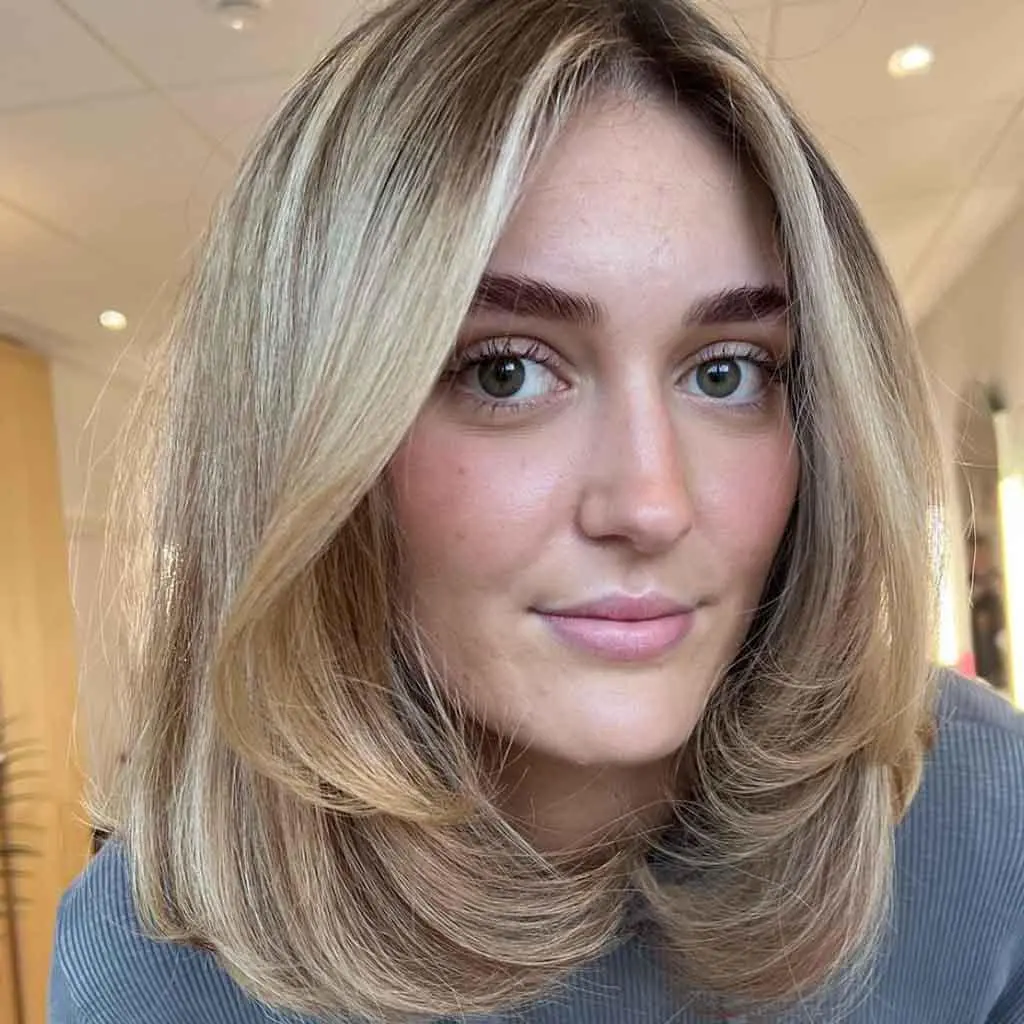
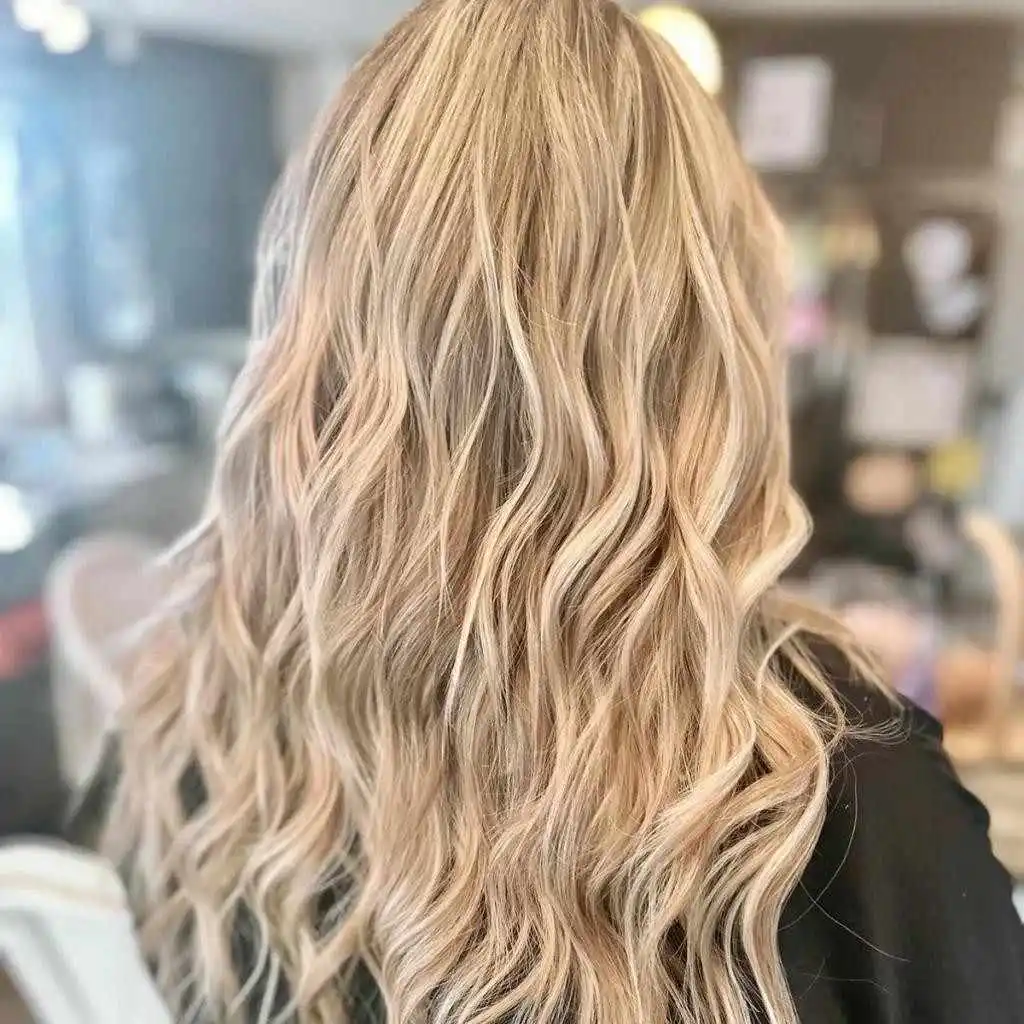
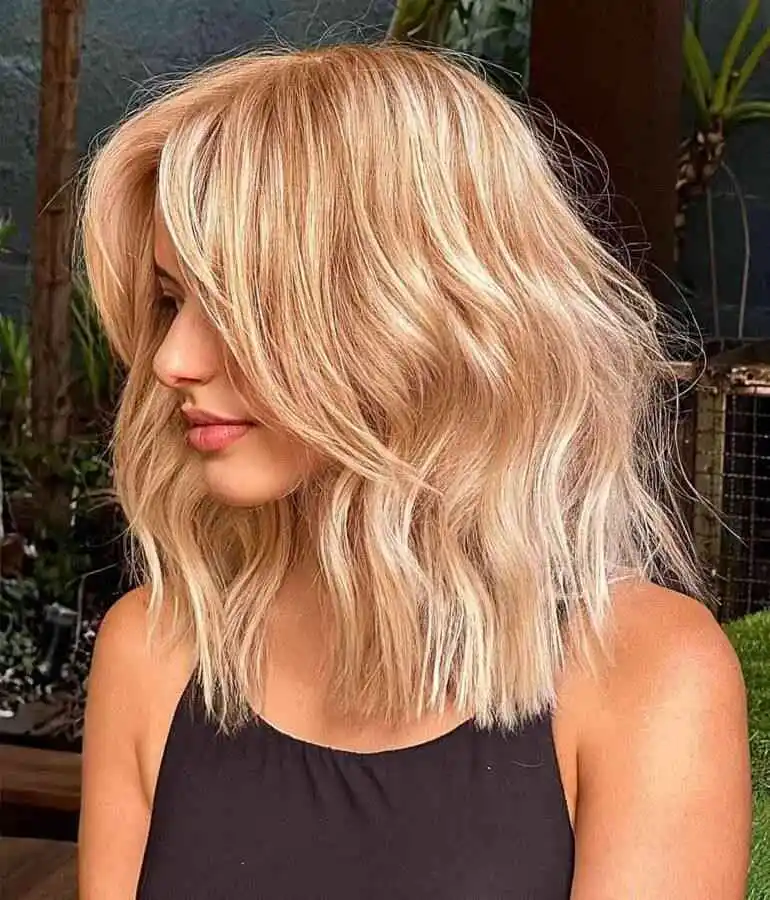
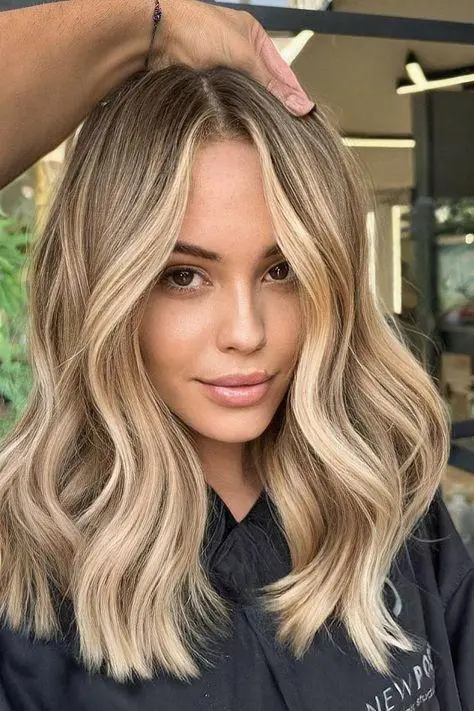
Warmth is back. Butter blonde hair styles and honey balayage are leading the pack, usually paired with softer cuts shags, curtain bangs, that sort of thing. Icy platinum has not disappeared, but it is losing ground to “lived in” blondes that grow out without looking like a mistake. Chunky, face framing highlights are also having a moment again, especially on shorter cuts like bobs and bixies.
Recommended Post: Latest 18 Eye Makeup Styles 2026
How to Actually Pick the Right Blonde
Before you screenshot a photo off Pinterest and hand it to your stylist worth knowing that the exact same shade can look completely different depending on a few things that have nothing to do with the photo itself.
Undertone is the big one, and it matters more than whatever the shade is called on the box. Warm undertones gold, peachy, oliveleaning skin tend to suit honey, buttery, golden blondes. Cooler undertones do better in ash, champagne, or platinum. Not sure which you are? Look at your wrist veins in daylight. Greenish usually means warm, bluish usually means cool. It is not foolproof, but it is a decent starting point.
Then there is maintenance, and I would just be honest with yourself here. Full platinum needs toning every 4 to 6 weeks and a fair amount of bondrepair work in between. Balayage and babylights are built to grow out slowly, so you can realistically stretch appointments to 10, sometimes 14 weeks.
Face shape matters for the cut more than the color, though the two do play off each other. Rounder faces generally look good with something soft and a little messy a shag, curtain bangs because it adds movement near the jaw. Blunt bobs and sleek lobs tend to sharpen softer features.
And texture changes how the color actually reads on your head. Curly and coily hair shows off babylights and dimension almost effortlessly, since the curl pattern is already doing half the work. Fine, straight hair usually looks better with lower contrast otherwise you risk that striped look as it grows out.
I will be honest when I started pulling this list together of blonde hair styles , I expected a handful of overlapping trends dressed up with different names. That is not really what happened. Colorists are genuinely splitting blonde into distinct lanes this year: warm versus cool, structured cuts versus shaggy texture, bold statement pieces versus quiet, grownout color nobody would guess was recent. Twenty styles later, here’s what is actually worth booking, who each one suits, and what to say out loud in the chair so you get what you meant instead of what got lost in translation.
1. Butter Blonde
This is the shade everyone is asking for right now, and honestly it is not hard to see why. Warm, creamy, somewhere between honey and platinum rich enough that it doesnot read as an accident, soft enough to wear in January without looking out of season.

It suits warm and neutral undertones best, and works especially well on mediumtodark natural hair that wants a real lift without going full blondeout. Maintenance sits in the middle: because it is a warm tone, regrowth doesnot scream at you the way ash or platinum does, so most people get away with toner touchups every 8 to 10 weeks. At the salon, ask for a full foil or balayage with a goldbased toner and if your hair is already been colored, push for a bond-builder like Olaplex mixed into the lightener. Your ends will thank you later.
2. Honey Balayage
Still one of the most requested low-maintenance blondes out there, though 2026 is version skews a touch darker and richer than the beachy honey balayage everyone did a few summers ago. Because it is handpainted, the color concentrates through the midlengths and ends while the root stays soft which is really the whole appeal.
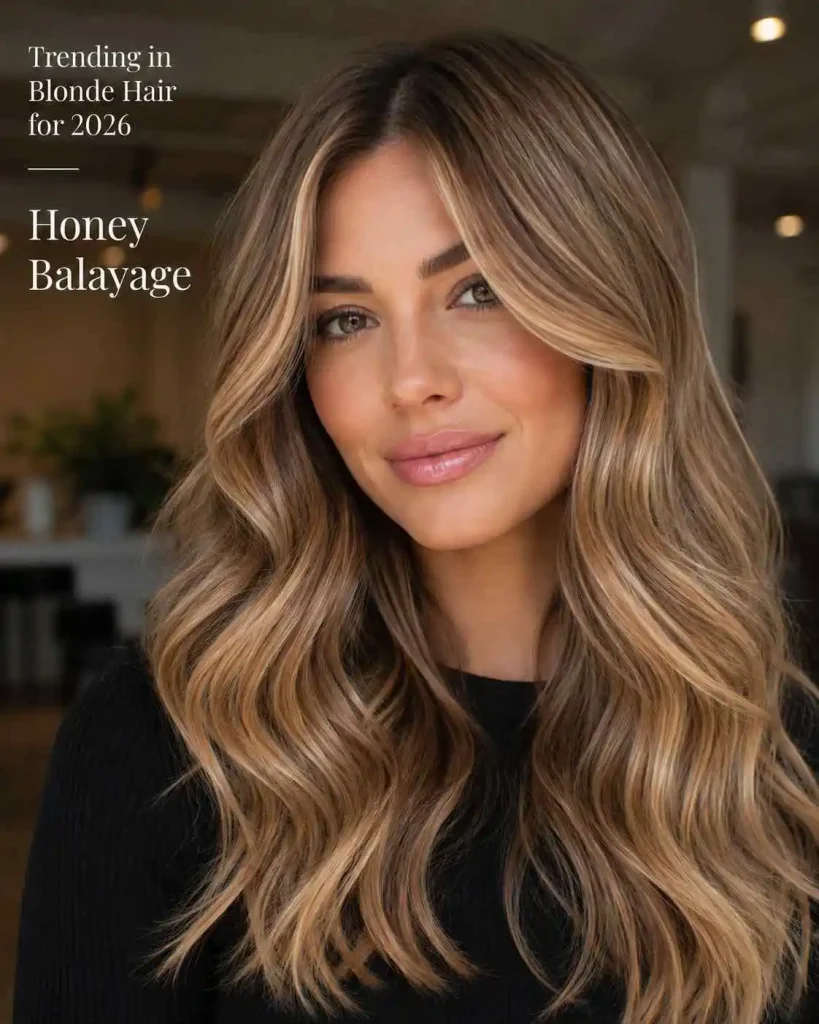
It is a great option for brunettes easing into blonde without committing to a full head, and if you are someone who dreads sitting in a salon chair often, this one is forgiving the rootmelt effect means regrowth barely shows for close to three months. Ask for a root smudge or shadow alongside the balayage so dayone hair doesnot have that harsh line between natural root and honey ends.
3. Ice Blonde Bob
For people who want maximum contrast and donot mind the upkeep that comes with it, this is 2026’s boldest blonde statement. Chintojaw length, nearwhite, cooltoned it reads modern, a little sharp, in the best way.

Cool undertones and fairtomedium skin tend to carry this best, especially paired with strong bone structure that lets the haircut do the talking. Fair warning though: this is highmaintenance. Weekly purple shampoo is nonnegotiable, salon toning every 4 to 6 weeks, and you will want consistent bond treatments to avoid breakage, since lifting hair this light is genuinely hard on it. Ask your colorist for a blueviolet based toner to hold off brassiness, and get a gloss at every visit platinum loses its shine fast without one.
4. Money Piece Blonde
Face framing “money piece” highlights are not new they have been around a while but the 2026 version is subtler and a bit wider than before, blending into the rest of the hair instead of sitting there as an obvious two stripe accent.

What is nice about this one is that it works on pretty much any base color and any length, so it is a good entry point if you want a blonde moment without lightening your whole head. Maintenance is low since it is contained to two sections near the face it grows out gently and doesnot demand frequent full appointments. Ask for the piece painted just past the brow line, slightly wider than you had have gotten a few years back, so it actually catches light when you move.
5. Sun Kissed Baby lights
Baby lights use fine, closely spaced foils to mimic the way hair naturally lightens outdoors, and this year colorists are packing them in a bit more densely through the crown for extra brightness near the face.

If you have got fine or thin hair that can not really handle chunky highlights without looking patchy, this is probably your best bet it gives you that “did she do something or not” natural blonde without weighing hair down. Maintenance is moderate: more foils mean more chair time up front, but the subtlety of the result means you would not need to go back as often. Ask for baby lights concentrated around the hairline and part, tapering off through the mid lengths, for that soft, sun warmed look.
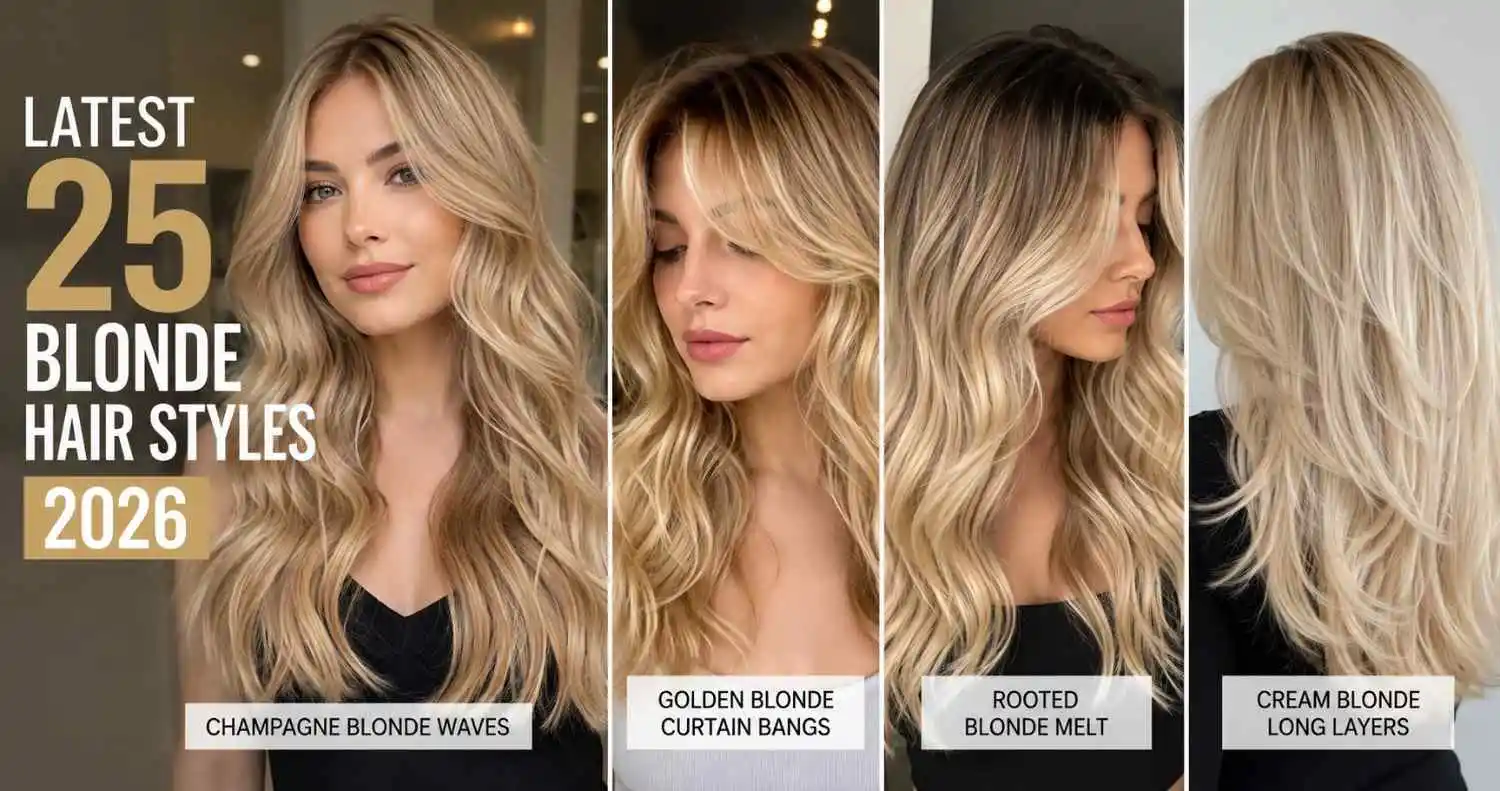
6. Champagne Blonde Waves
Champagne blonde lands between beige and platinum pale and a touch cool, never gray or flat. Styled straight, it can look almost bridal, which is why most colorists are pairing it with loose, undone waves instead. The texture keeps it from feeling too formal.

It suits fair to medium skin with cool or neutral undertones best; on very warm skin it can wash things out unless the roots get slightly warmed up. Upkeep sits in the moderate range purple shampoo a couple times a week, toner every six to eight weeks or so.
Best for
Fair to medium skin, cool or neutral undertones.
Maintenance
Moderate. Purple shampoo two to three times weekly, toner every six to eight weeks.
Ask your colorist for
Loose, undone waves with champagne blonde skip the sleek styling, and ask for slightly warmed roots if your skin runs warm.
7. Vanilla Blonde Layers
Warmer and creamier than champagne, vanilla blonde stays close to butter without tipping fully golden. Most colourists apply it as a gentle all over lift rather than heavy highlighting, which is a big part of why it is become such a low effort favourite.
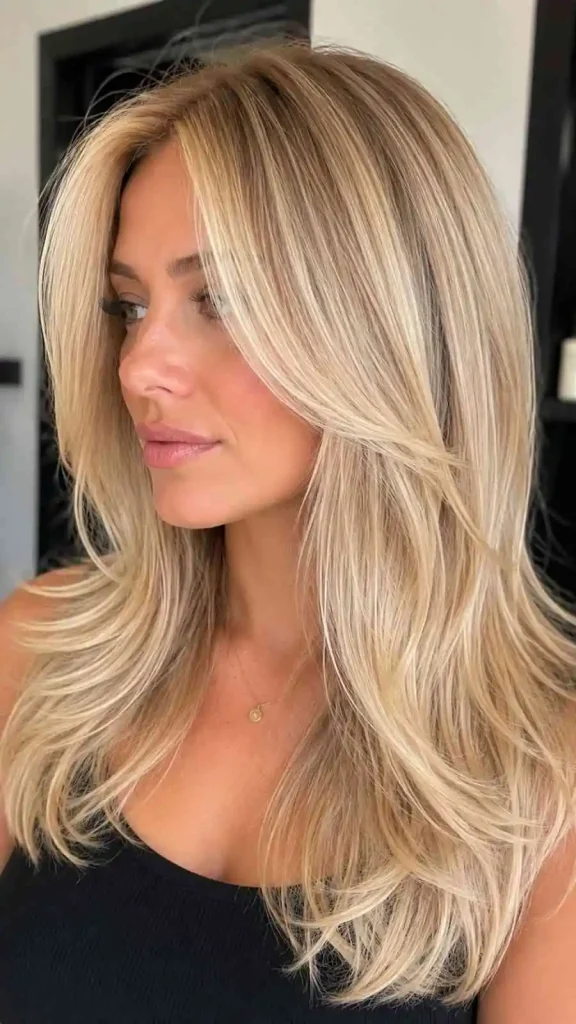
What really makes this one work, though, is the cut. Long, faceframing layers give vanilla blonde movement that a blunt cut just can not especially on fine or medium hair that tends to sit flat otherwise. Regrowth is forgiving since the tone stays soft, so most people stretch to ten or twelve weeks without much fuss.
Best for
Warm and neutral undertones; fine to medium hair that needs help with volume.
Maintenance
Low to moderate. Ten to twelve weeks between appointments is typical.
Ask your colorist for
A soft, allover vanilla lift paired with long layers cut through the length, concentrated around the face.
8. Platinum Pixie Cut
This is the one bold move on the list. Platinum is been back for a couple of seasons, but the pixie version for 2026 isnot the razorsharp, ultrasevere cut from ten years ago there is more texture on top now, sometimes a soft fringe, so it doesnot look quite so uniform.

Committing to this combination means committing, full stop. Toning every four to six weeks is close to mandatory, and a short cut needs trims almost as often just to hold its shape. If you have got strong facial features and want your hair to feel architectural rather than soft, though, nothing else on this list reads as confidently modern.
Best for
Strong facial features; anyone who wants a bold, sculptural look.
Maintenance
High. Toning every four to six weeks, trims nearly as frequent.
Ask your colorist for
A textured pixie with some movement on top not a uniform, razorsharp shape.
9. Golden Blonde Curtain Bangs
Curtain bangs never really left, but golden blonde is what is giving them new energy this year. Warmer and deeper than butter or honey, golden blonde is closer to what most people picture when they imagine classic sunlit hair.
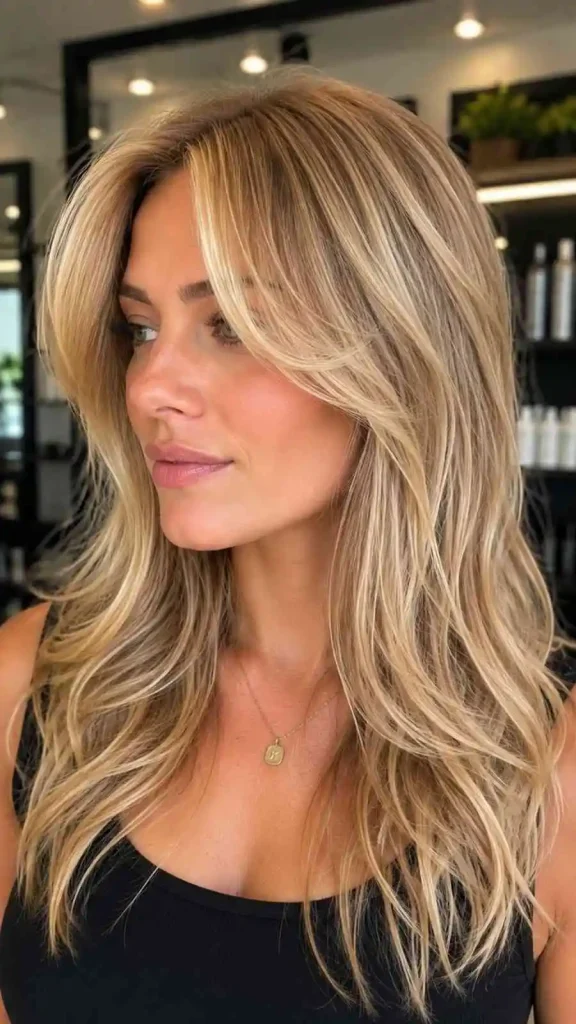
The bangs are doing most of the visual work centerparted, swept to either side, softening the face almost instantly. That is part of why this combination flatters nearly every face shape, round or angular. The color itself is easy to live with since warm tones hide regrowth well; the bangs are the highermaintenance part, needing trims every three to four weeks before they grow into that awkward inyoureyes stage.
Best for
Nearly every face shape.
Maintenance
Low to moderate on color; bangs trimmed every three to four weeks.
Ask your colorist for
Center-parted curtain bangs with an all-over golden tone.
10. Beige Blonde Lob
Long bobs lobs have stuck around for years, and beige blonde is what is making this one feel current again. Deliberately muted, beige avoids both the coldness of ash and the warmth of gold. It is a color that looks expensive precisely because it is not trying too hard.

It flatters just about every undertone, honestly, which explains why it is such a reliable request across the board. Because the tone is neutral, regrowth blends in gently, so a tenweek color schedule usually holds up fine.
Best for
Every undertone.
Maintenance
Low to moderate. Roughly ten weeks between color visits.
Ask your colorist for
A neutral beige blonde with soft layers and a slight bend at the ends skip the blunt cut.
11. Rooted Blonde Melt
This one is the antidote to that “just left the salon” look. Rather than blending color evenly root to tip, colourists leave a deeper, natural looking root and melt it gradually into lighter blonde through the mid lengths and ends. Soft, a little shadowy near the crown, and it grows out looking intentional instead of overdue.

Low-maintenance appeal is really what is driving this, more than anything trendy. People are tired of stark demarcation lines a month after their appointment, and the root melt solves that directly.
Best for
Medium to dark natural hair; brunettes easing into blonde.
Maintenance
Low. Twelve weeks or longer between visits is common.
Ask your colorist for
A root melt or shadow root, kept close to your natural depth so it doesnot read as a stripe.
12. Pearl Blonde Straight Hair
Pearl blonde photographs better than it sounds on paper a cool, faintly iridescent blonde with hints of violet and silver that catch light almost like actual pearl. Paired with sleek, straight styling, it gets a polished, glassy finish that suits anyone who wants their hair to look deliberate.
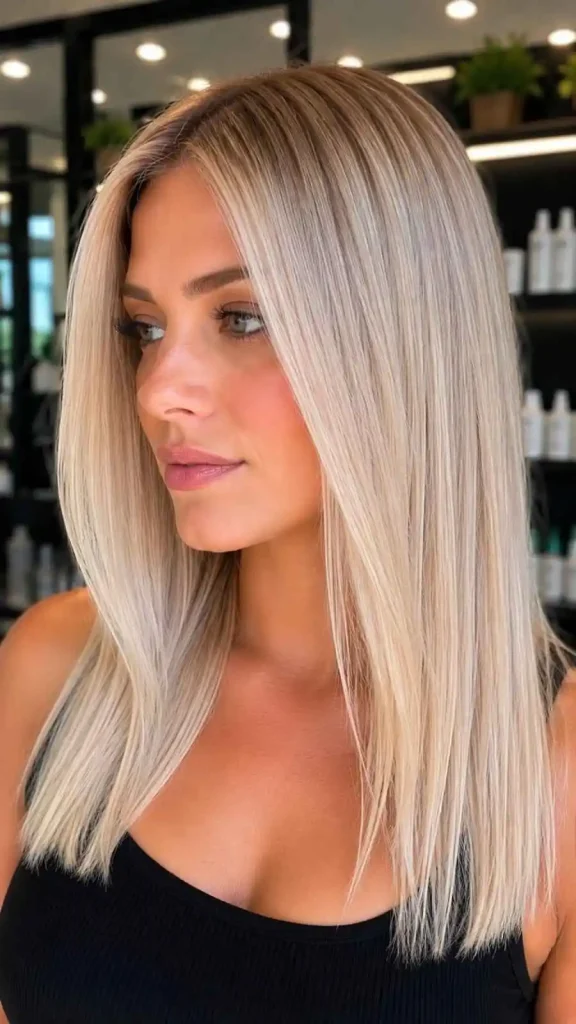
Because the tone runs so cool and light, healthy hair matters here more than usual. Straight styling shows every bit of dullness, so this combination tends to work best on hair that’s already in decent shape.
Best for
Cool undertones, fair to light skin; healthy hair that can hold a sleek finish.
Maintenance
High. Weekly purple or bluetoned shampoo, regular gloss treatments, toning every four to six weeks.
Ask your colorist for
A violetandsilver toner over a pale base, plus an insalon gloss before you leave.
13. Sandy Blonde Shag
Shags arenot new, but sandy blonde is what makes this one feel fresh right now. Neutral and slightly muted not as warm as honey, not as cool as ash it pairs naturally with the choppy, layered texture that defines a good shag.

Wavy or slightly curly hair falls into shaggy layers almost without trying. Fine, pin-straight hair can still pull it off, just with more product or a diffuser to fake that lived-in shape.
Best for
Wavy or textured hair.
Maintenance
Moderate. Color is low-fuss; the cut needs trims every eight to ten weeks.
Ask your colorist for
Heavy layering throughout, a slightly longer face-framing piece, and a neutral sandy tone.
14. Ash Blonde Wolf Cut
The wolf cut shorter, choppier, more chaotic than a shag has been building for a couple of years, and ash blonde gives it an edgier finish for 2026. Ash strips out warmth entirely, leaving a smoky, gray-leaning tone that plays well against the wolf cut’s rougher layers.
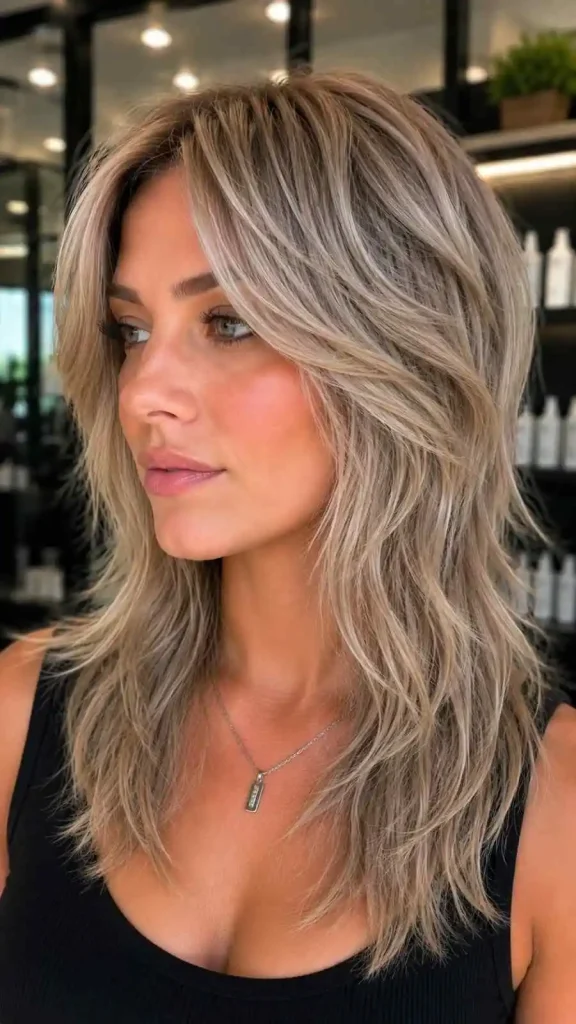
This combination reads bold. It tends to suit people who actually want their hair to be a focal point, not something quiet in the background and it does best on thicker hair, since the heavy layering needs volume to work with.
Best for
Cool undertones; thicker or medium-density hair.
Maintenance
High. Toning every four to six weeks to avoid brassiness, plus regular trims.
Ask your colorist for
An ashbased toner over a lightened base, with heavy layering at the crown and shorter face-framing pieces.
15. Cream Blonde Long Layers
Cream blonde is soft and warm-neutral, sitting close to natural, sun lightened hair without going too golden or too icy. Paired with long layers, it comes across polished but not stiff probably why it’s turned into such a popular everyday choice.
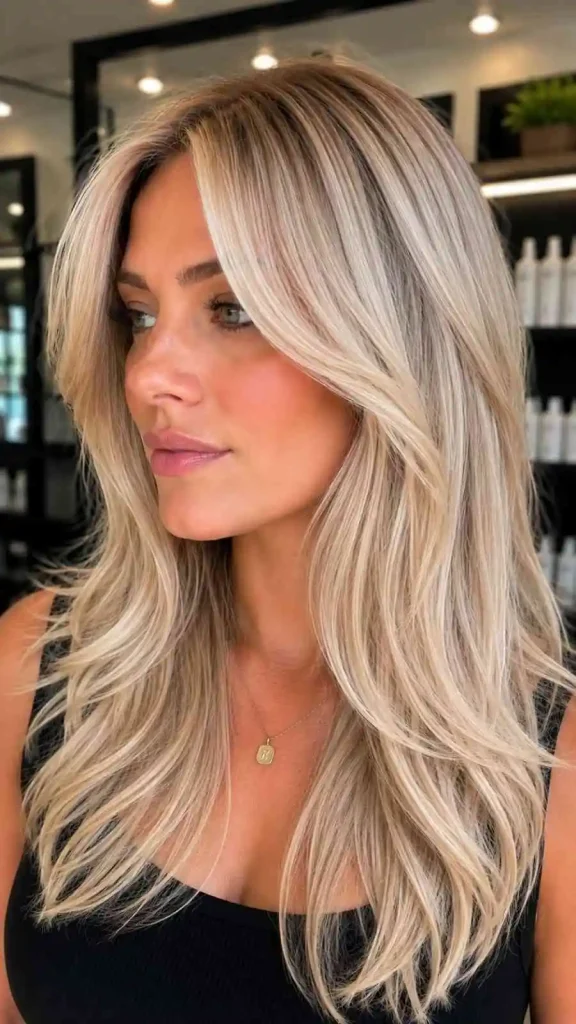
Long layers add shape and movement without sacrificing length, and because cream blonde is softtoned, regrowth is genuinely one of the easiest to live with on this whole list.
Best for
Warm or neutral undertones; longer hair.
Maintenance
Low. Ten to twelve weeks between color appointments.
Ask your colorist for
A soft, allover cream tone with subtle layers cut mainly around the face and ends.
16. Blonde French Bob
Short, blunt, usually curving in slightly at the jaw the French bob is been a quiet favorite for a while, and blonde is giving it new life. There is something about a crisp cut paired with lighter hair that reads chic instead of severe, especially with ends left a little undone rather than razor straight.

It suits people who want a defined shape without it feeling too polished. Warmer, softer blonde tones tend to keep this cut from looking too stark against the face.
Best for
Straight to slightly wavy hair; anyone wanting a defined shape without heavy styling.
Maintenance
Moderate. Trims every six to eight weeks to hold the line.
Ask your colorist for
A jawlength blunt cut with a slight inward curve, paired with a soft, warmleaning blonde.
17. Mushroom Blonde Blend
Odd name, real staying power. Mushroom blonde is a muted, grayish-beige tone that avoids both warmth and stark coolness think of it as mushroom brown’s blonde cousin. What makes it a “blend” rather than a flat color is the multi tonal application: colorists weave in slightly lighter and darker pieces so it doesn’t read as one uniform block.
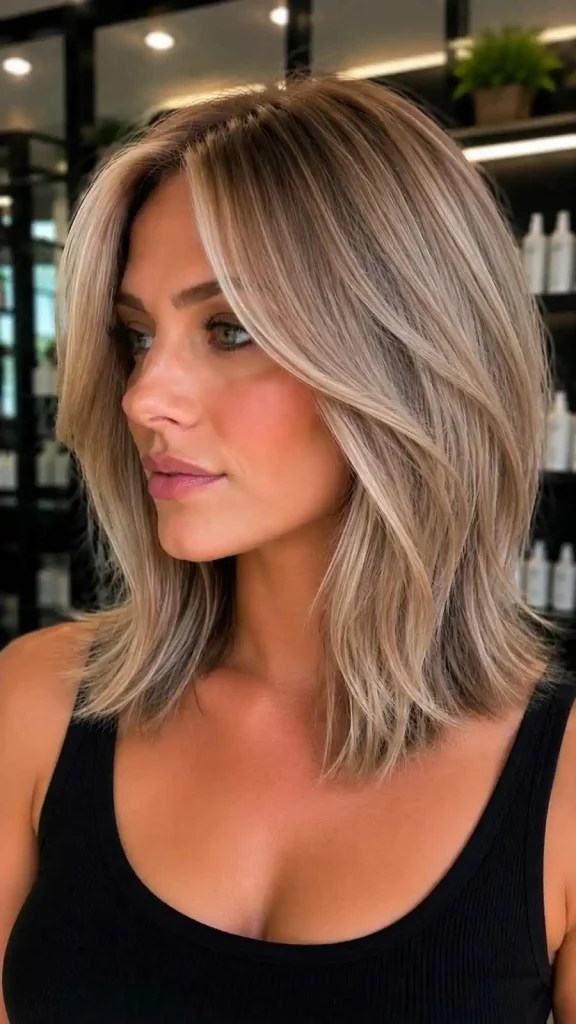
It is a quiet, sophisticated shade that appeals to people who’ve found ash or platinum too harsh but still want something cool.
Best for
Cool to neutral undertones.
Maintenance
Moderate. Toning every six to eight weeks.
Ask your colorist for
A multitonal mushroom blend a mix of lighter and deeper pieces, not one flat shade.
18. Bright Blonde Blowout
Less about color, more about styling though it usually pairs with a lighter, brighter base to really land. A bright blonde blowout means big, smooth, voluminous hair with a glossy finish, the kind you would get for a night out, except people are now requesting it as an everyday look.

It photographs well and holds up under movement, which is probably the appeal. The catch: it takes some styling skill or tools at home to maintain between visits.
Best for
Medium to thick hair that can hold volume.
Maintenance
High on styling effort, moderate on color.
Ask your colorist for
A brightening gloss for shine, and if blowouts aren’t your thing yet ask your stylist to walk you through their roundbrush technique.
19. Scandinavian Blonde
That ultra pale, almost flaxen blonde associated with naturally fair Nordic hair cooler and lighter than most shades on this list, without tipping into full platinum white. It’s meant to look like it could be natural, even starting from several shades darker.

Because it sits at the lightest end of the spectrum, this one takes real technical skill to avoid looking brassy or strawlike.
Best for
Fair to lightmedium skin, cool or neutral undertones.
Maintenance
High. Toning every four to six weeks, consistent bondrepair treatments.
Ask your colorist for
A pale, cool flaxen blonde, built up gradually over multiple sessions if starting from a darker base.
20. Caramel Blonde Face Framing Layers
Caramel blonde brings warmth back rich and toffee-leaning, deeper than butter or honey but still reading as blonde rather than light brown. Paired with face framing layers, it draws attention exactly where you want it, softening the face while adding dimension around the jaw and cheekbones.
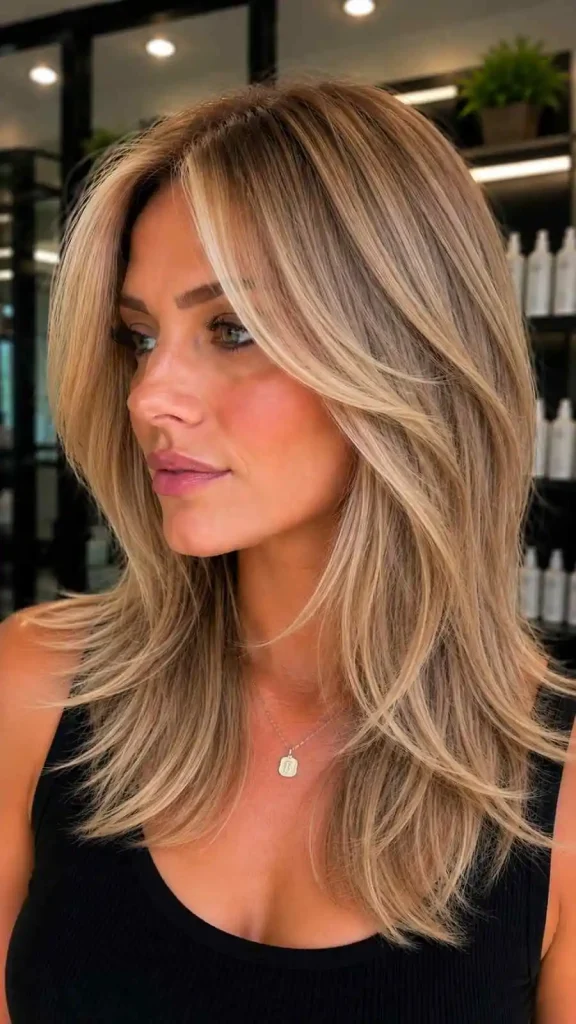
It is popular partly because it doesnot require lightening the whole head colorists concentrate caramel tones around the face and let the rest blend naturally.
Best for
Warm undertones; medium to dark natural hair.
Maintenance
Low to moderate. Ten to twelve weeks between visits.
Ask your colorist for
Caramel faceframing highlights blended into your natural base, with layers cut around the cheekbones and jaw.
21. Blonde Butterfly Cut
The butterfly cut is been building for a couple of years, and blonde turns out to be a great match. Dramatic, face framing layers up top get progressively longer toward the back, creating a shape that opens up when you move your head hence the name. On blonde hair, that layering catches light in a way darker strands just do not.
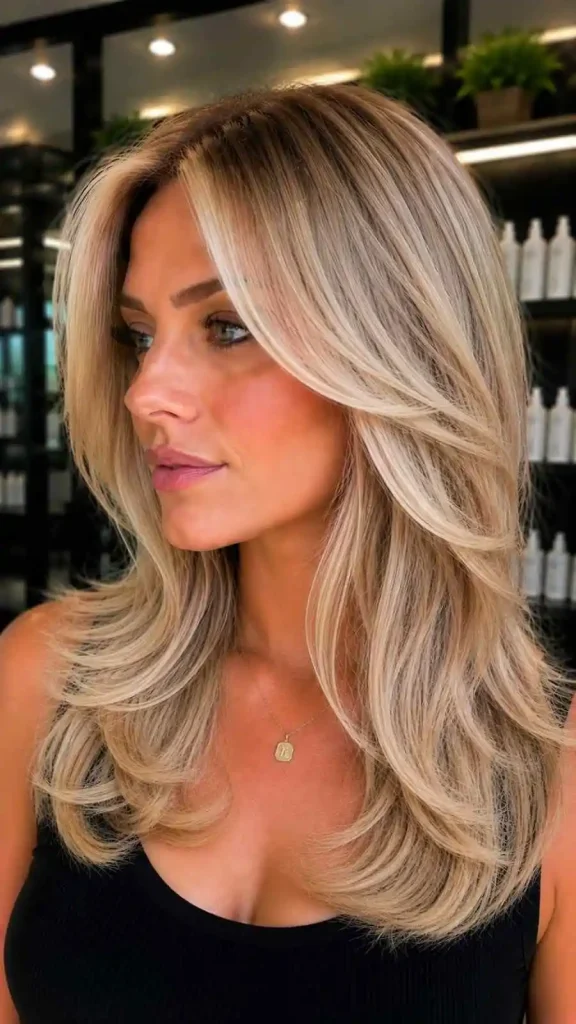
It works best on hair with some natural body, since the layers are built for volume and separation.
Best for
Medium to long hair with natural wave.
Maintenance
Moderate. Trims every eight to ten weeks to keep the layering intact.
Ask your colorist for
Heavy, faceframing layers at the crown, with a brightening tone to show off the movement.
22. Soft Wheat Blonde Curls
Wheat blonde is warm and slightly muted not as golden as honey, not as pale as vanilla, closer to an actual wheat field. Paired with natural or styled curls, it takes on a soft, sun-bleached look that reads effortless.
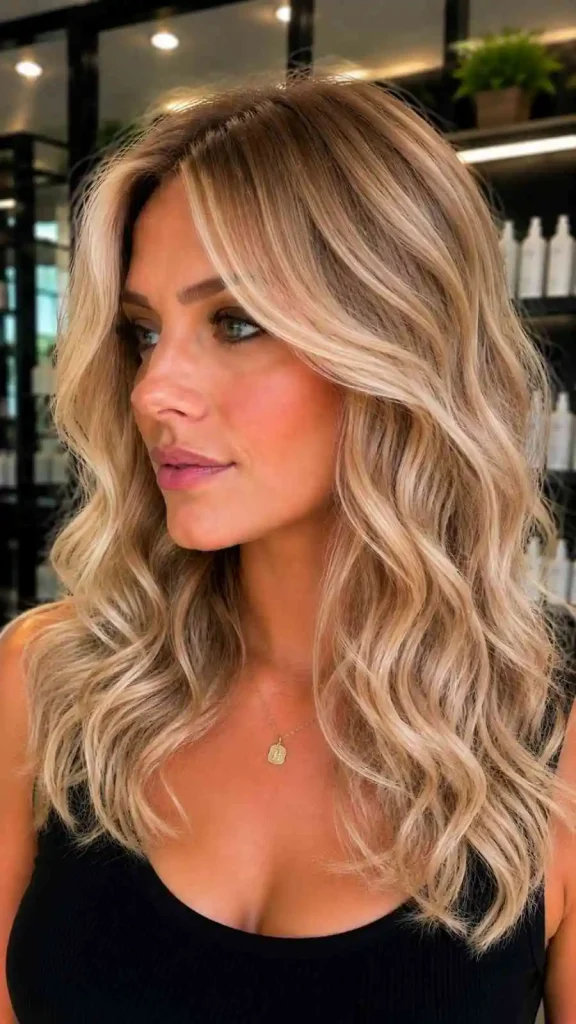
Curly hair and warm blondes have a natural affinity for each other; the curl pattern creates its own dimension, and the warm tone keeps things cohesive instead of patchy.
Best for
Curly or wavy hair, warm to neutral undertones.
Maintenance
Low to moderate. Forgiving on regrowth.
Ask your colorist for
A warm, lowcontrast wheat blonde applied with the curl pattern in mind, not painted on as if the hair were straight.
23. Smoky Blonde Balayage
Smoky blonde takes balayage is softness and adds a cooler, faintly grey undertone that mutes down any brightness. It is moodier than a typical sunkissed balayage which is really the point. It reads more deliberate than beachy.

This one suits people who want balayage is easy growout without leaning into warm, golden tones. On very fair skin it can occasionally look a touch flat, so colorists often adjust the depth slightly.
Best for
Cool to neutral undertones.
Maintenance
Low to moderate. Ten to twelve weeks between appointments.
Ask your colorist for
A cooltoned balayage, with the lightener kept slightly softer than a beachy application.
24. Linen Blonde Textured Bob
Linen blonde is a soft, grey ash beige tone named for the fabric paired here with a textured bob: shoulder length or shorter, with choppy, piece y ends instead of a smooth blunt line. The texture keeps linen blonde from looking flat, since on its own the tone can read a bit lifeless without movement to break it up.
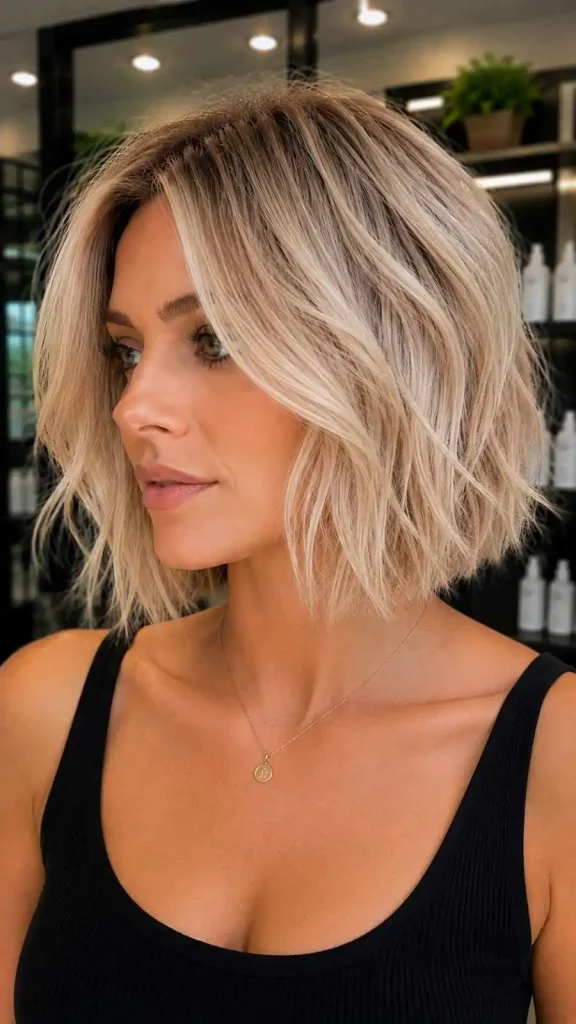
This combination suits people who want a shorter cut without a crisp, polished shape the choppiness gives it a more relaxed feel.
Best for
Fine to medium hair.
Maintenance
Moderate. Trims every six to eight weeks.
Ask your colorist for
A neutral, muted beige-blonde with pointcut or textured ends, not a blunt finish.
25. Bright Beige Blonde with Feathered Layers
Beige blonde has stuck around for years, but this “bright” version pushes it a shade or two lighter than usual, while feathered layers add softness around the face and through the ends. Feathering thin, wispy layers that taper rather than cut bluntly gives the whole look an airier feel that suits the brighter base.
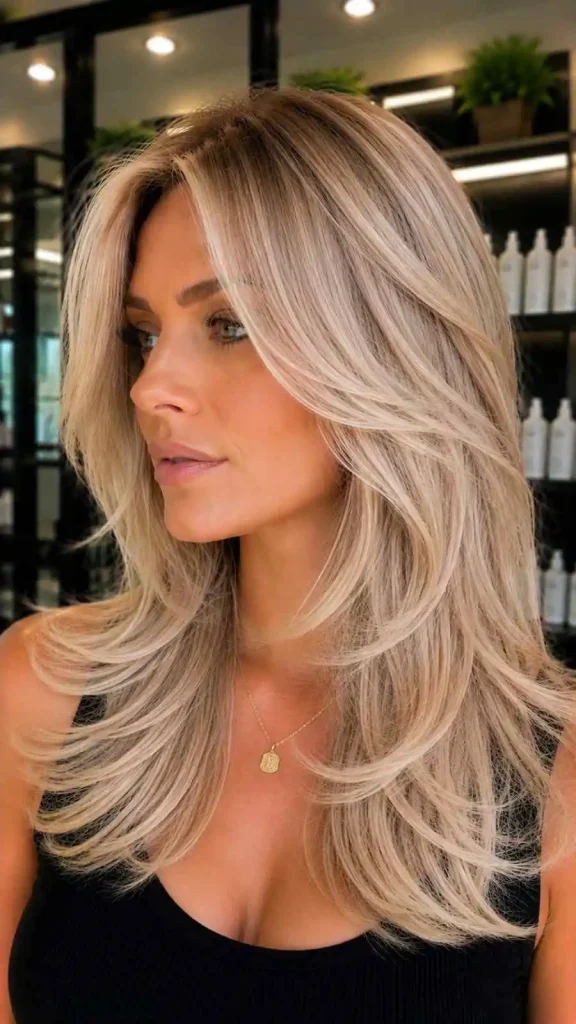
It is versatile across lengths, and the brightness means it reads as blonde from across a room instead of blending into a neutral haze.
Best for
Most undertones, leaning warm to neutral; medium to long hair.
Maintenance
Moderate. Toning every six to eight weeks, trims on a similar schedule.